
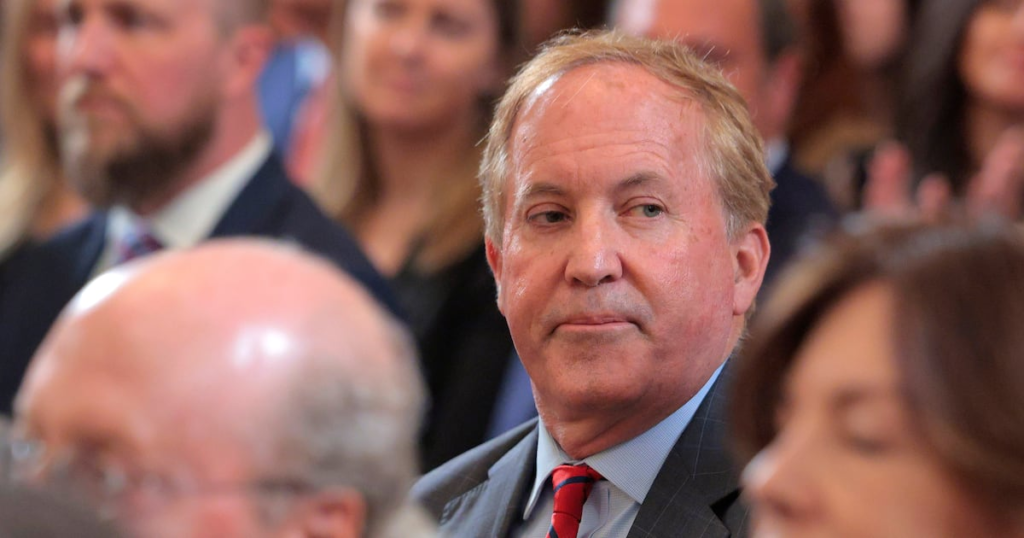
Understanding the Ken Paxton Election Authority Deadlock: Key Insights and Implications
In recent developments within Texas politics, the focus has turned toward the “Ken Paxton election authority deadlock.” Attorney General Ken Paxton’s attempts to expand his authority over prosecuting election crimes have faced significant legislative hurdles. Accordingly, the Texas House and Senate could not reach a consensus on legislation designed to empower Paxton in managing election-related offenses. For criminal defendants interested in the nuances of power dynamics and legislative processes, this article provides a detailed exploration of the proposed legislation and its ramifications.
An Overview of the Proposed Legislation
The Push for Expanded Authority
Key Features of House Bill 5138
This bill, championed by State Representative Matt Shaheen, aimed to enhance the Texas Attorney General’s ability to prosecute local election crimes independently, especially when county authorities fail to take action. The initiative emerged after the Texas Court of Criminal Appeals ruling, which held that the Attorney General’s office lacked the power to prosecute such cases without a request from a local prosecutor.
Division Between House and Senate
Senate’s Proposition
The Senate’s version supported allowing the Attorney General’s office to pursue election offenses unilaterally, bypassing local prosecutors if they did not act within a specific timeframe. This proposal aligns with Paxton’s ambitions for direct involvement in election crime investigations.
House’s Approach
Conversely, the House proposed a cautious approach, granting prosecutorial powers to the Attorney General only after local authorities explicitly declined to address reported election crimes for six months. This version included checks, permitting local prosecutors to contest the Attorney General’s jurisdictional claims.
Legislative Stalemate and Outcomes
Despite intense deliberations, a conference committee failed to reach an agreement, resulting in the bill’s stagnation. Hence, the Attorney General’s office continues without expanded prosecutorial authority over election-related offenses, maintaining existing legal restrictions.
Political Context and Implications
Paxton’s Controversial Tenure
Ken Paxton’s quest for increased authority is further complicated by his controversial career, marked by impeachment allegations and a Senate acquittal. Additionally, his assertive campaign against Republican judges who contradicted his legal stance on election crimes adds complexity to his pursuit of greater prosecutorial power.
Potential for Special Legislative Session
Although unresolved, this deadlock presents the possibility for Governor Greg Abbott to call a special legislative session to resolve the issues surrounding the Attorney General’s prosecutorial reach.
Broader Implications and Concerns
Constitutional and Local Autonomy Considerations
Critics, including voting rights advocates, have raised concerns about the constitutionality of centralizing power over local election investigations with the Attorney General. They argue that such a move could infringe on local autonomy, increase prosecutions, and intimidate voters and local election officials.
Future Prospects
As Paxton gears up for a U.S. Senate race against Republican incumbent John Cornyn, the outcome of this legislative deadlock is anticipated to shape the political landscape and impact future legislative strategies concerning election crime prosecutions in Texas.
Further Resources and Readings
For more insights into the legislative processes and implications of the proposed expansion of prosecutorial powers by the Texas Attorney General, consider the following resources:
- 88(R) HJR 98 – Introduced version: This document details the arguments for and against expanding the Attorney General’s authority in election crimes.
- Ken Paxton’s push for more power in election crime prosecution: An article by Natalia Contreras at Votebeat and The Texas Tribune that offers an analysis of how Paxton’s past actions and reputation have influenced legislative proceedings.
- Evaluating constitutional concerns in election crime legislative proposals: This document also explores the constitutional concerns associated with granting additional prosecutorial powers to the Attorney General over local election investigations.
In summary, exploring the “Ken Paxton election authority deadlock” offers valuable insights into the complexities of legislative struggles and their broader implications on Texas politics.